Bangkok, Thailand, 18 June 2026 — As climate risks intensify across Asia and the Pacific, disaster preparedness can no longer remain confined to national plans, technical systems, or policy discussions. It must reach the communities that face hazards first and are often the first to respond.
This was the key message of the second webinar in the series “A Decade of Localization in Practice: From Sustainable Partnerships to Locally Led Preparedness,” organized by the Asian Disaster Preparedness Center (ADPC) through the Asian Preparedness Partnership (APP). The webinar, titled “Localization at the Frontlines: Advancing Locally Led Disaster Preparedness,” brought together regional experts and country practitioners to explore how local leadership, science and technology, early warning systems, and multi-stakeholder collaboration can strengthen preparedness at the community level.
Strengthening Local Leadership for Disaster Preparedness
Opening the webinar, Mr. Aslam Perwaiz, Executive Director of ADPC, reflected on nearly a decade of progress under the Asian Preparedness Partnership, supported by the Gates Foundation. He emphasized that locally led preparedness has become increasingly important as communities face more frequent and unpredictable hazards, including storms, floods, extreme heat, and changing rainfall patterns.
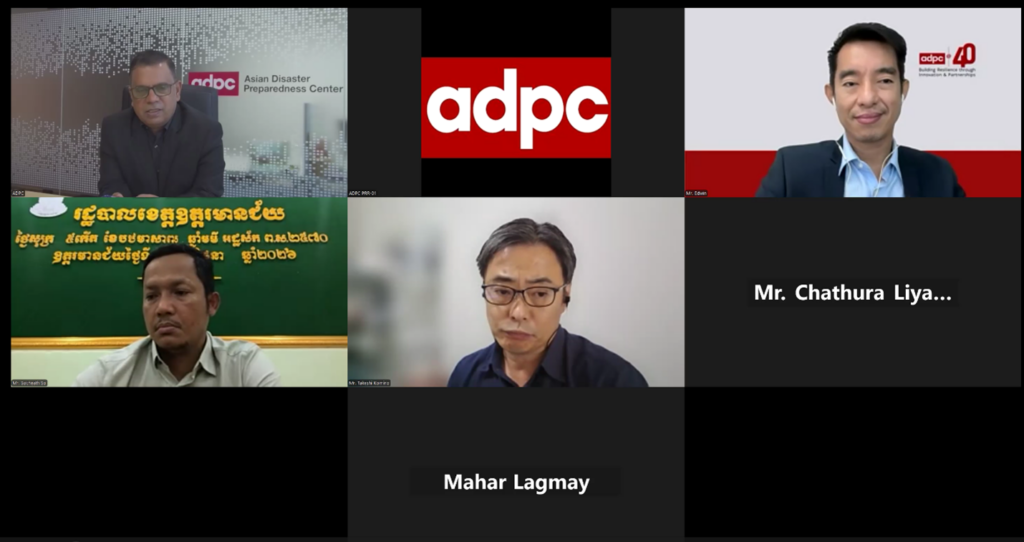
Mr. Perwaiz highlighted the need to empower local actors and leaders with the knowledge, resources, and decision-making authority required to take timely action before hazards escalate into disasters. He also underscored the importance of strengthening partnerships that connect local communities with national and regional disaster risk management systems.
Translating Local Knowledge into Action
Providing a regional perspective, Mr. Takeshi Komino, Chairperson of the Asian Disaster Reduction and Response Network (ADRRN) and Secretary General of CWS Japan, described locally led preparedness as a long-term transformation process rather than a project-based intervention.
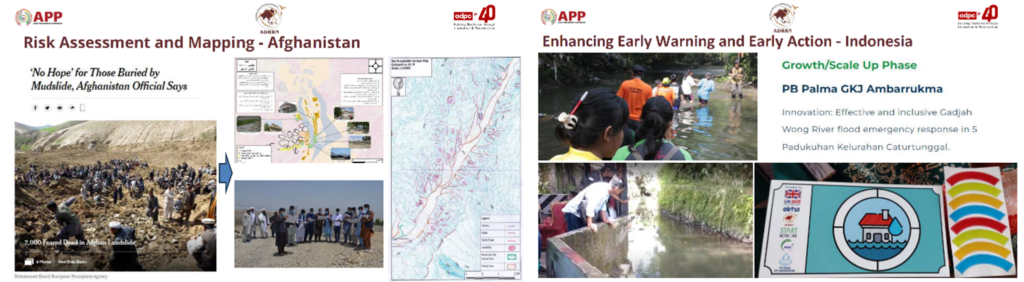
Drawing on examples from across the region, he demonstrated how local knowledge can be combined with scientific information and practical tools to improve preparedness outcomes. These examples included community-based hazard mapping in Afghanistan, rainfall threshold monitoring in Indonesia, low-cost landslide monitoring systems in Viet Nam, and school-based weather observation initiatives.
Mr. Komino emphasized that effective early warning systems depend not only on technology but also on community understanding and action. Communities must be able to interpret warnings, identify who needs assistance, and implement practical measures to protect vulnerable populations.
Supporting Local Action through the Asian Disaster Readiness Fund
The webinar also highlighted the Asian Disaster Readiness Fund (ADRF) as a key financing mechanism supporting locally led disaster risk management initiatives under the Asian Preparedness Partnership.
Ms. Ronilda Co, Program manager, localization, underscored that the fund enables National Preparedness Partnerships to identify local priorities and implement subnational initiatives focused on areas such as early warning, early action, and community-based disaster risk management. Its flexible and locally driven approach was presented as an important step toward strengthening preparedness through existing local systems and capacities.
Advancing Science-Based Preparedness in the Philippines
Representing the Philippine Preparedness Partnership (Philprep), Dr. Alfredo Mahar Francisco A. Lagmay, Executive Director of the UP Resilience Institute, emphasized the importance of making scientific information accessible and actionable for local governments and communities.
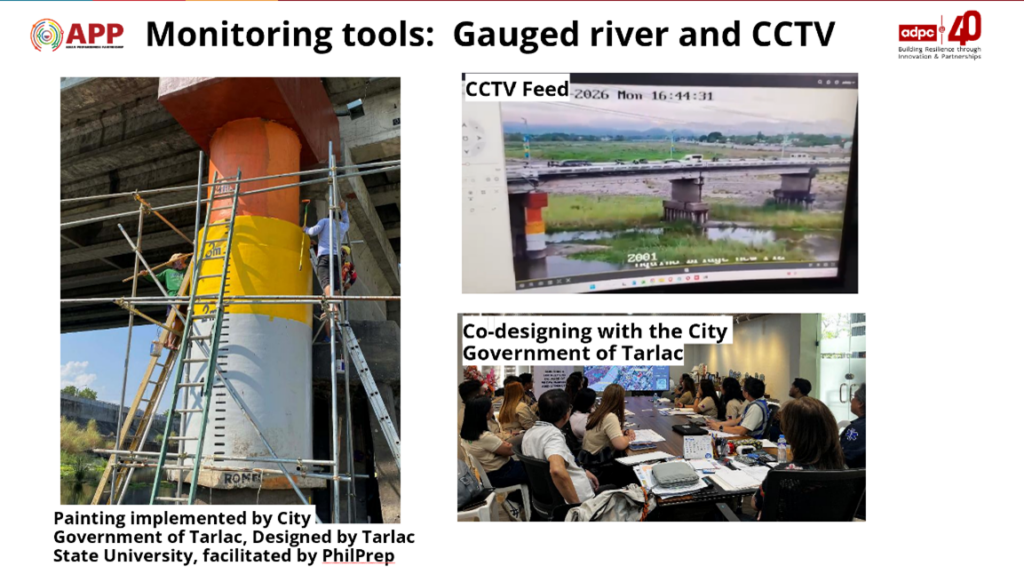
Dr. Lagmay noted that identifying hazards alone is insufficient. Communities and local authorities must also determine the interventions needed to reduce risk and strengthen resilience. He stressed the value of open data, open science, and transparent information-sharing systems that enable scientific knowledge to be trusted, replicated, and integrated into local development and disaster risk reduction planning.
Strengthening Inclusive Local Disaster Risk Management in Cambodia
H.E Socheath So, Advisor and PMU manager of the National Committee for Disaster Management (NCDM) of Cambodia shared experiences from the Preparedness Partnership of Cambodia, highlighting efforts to strengthen inclusive local disaster risk management mechanisms.
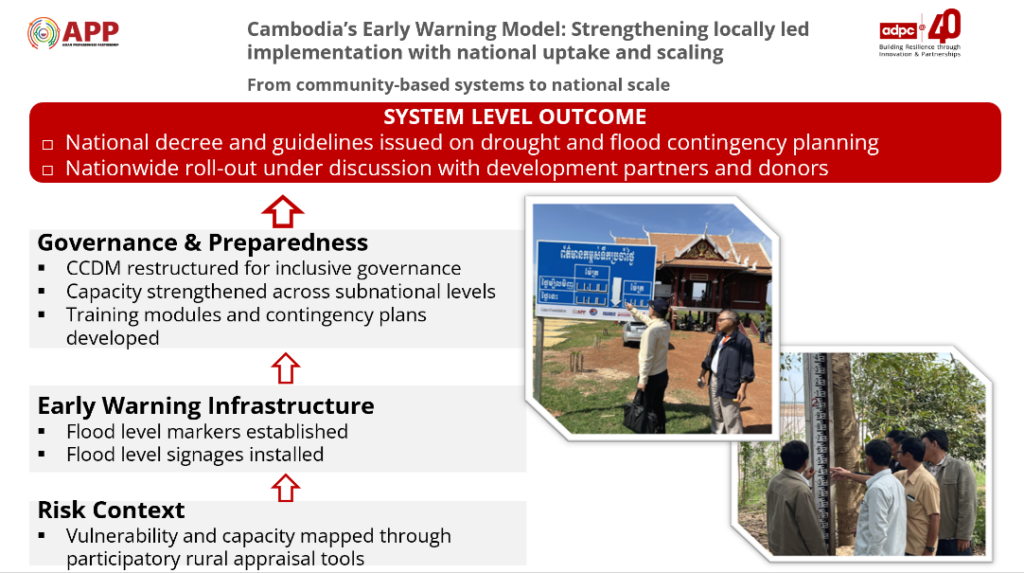
The initiative demonstrates how government agencies, civil society organizations, and private sector actors can work together to support local disaster management committees, improve flood and drought preparedness planning, and promote practical community-based tools such as flood markers, rain gauges, and local monitoring systems.
The Cambodia experience illustrated the importance of inclusive partnerships in ensuring that preparedness measures are relevant, accessible, and responsive to local needs.
Enhancing Multi-Stakeholder Coordination in Sri Lanka
From Sri Lanka Preparedness Partnership, Mr. Chathura Liyanarachchi, Director Preparedness at the Disaster Management Centre, discussed the role of multi-stakeholder coordination in strengthening preparedness and response.
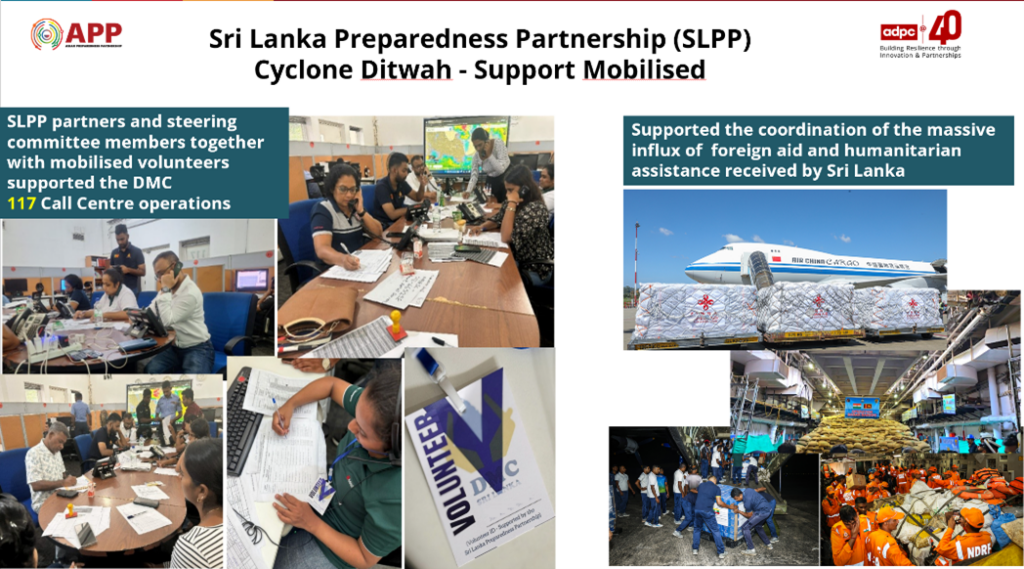
Drawing on recent disaster response experiences, he emphasized the importance of linking national systems with district, divisional, and community-level mechanisms. His presentation highlighted the contributions of coordination centers, rapid assessments, volunteer networks, private sector engagement, and community-based disaster risk management initiatives in enhancing preparedness and response capacities.
Scaling Locally Led Preparedness
The moderated discussion, facilitated by Mr. Edwin M. Salonga, Program Manager for Preparedness and Anticipatory Actions at ADPC, focused on how locally led preparedness can move beyond pilot initiatives and become institutionalized within disaster risk management systems.

Speakers agreed that communities should not be viewed as passive recipients of warnings or assistance. Instead, they should play an active role in identifying risks, interpreting information, planning actions, and maintaining preparedness systems over time.
The discussion also highlighted the importance of continuous learning, knowledge sharing, and investment in local capacities to ensure that successful approaches can be sustained and scaled.
Looking Ahead
In her closing remarks, Ms. Ronilda Co, Program Manager for Localization at ADPC, emphasized that localization is not simply about bringing activities closer to communities. Rather, it is about placing local governments, communities, civil society organizations, local businesses, and people’s organizations at the center of disaster risk reduction and preparedness efforts.

She noted that national and regional stakeholders have a critical role to play in aligning policies, systems, resources, and coordination mechanisms to support local leadership and locally driven action.
The webinar concluded with a clear message: locally led preparedness is most effective when it is inclusive, evidence-based, adequately resourced, and connected to broader disaster risk management systems. As hazards become increasingly frequent and complex across the region, strengthening local leadership and preparedness will be essential to ensuring that warnings lead to decisions, decisions lead to action, and action saves lives.