Tbong Khmom Province, Cambodia | 30 March – 3 April 2026
How can local communities respond quickly and effectively when floods strike?
In Cambodia, flood emergency response simulation exercises conducted across four communes in Tbong Khmom Province demonstrated how practical, scenario-based training can strengthen coordination, improve early warning dissemination, and enhance community-level response capacity before disasters occur.
Building on earlier efforts to develop and validate Commune Flood Contingency Plans, the Preparedness Partnership of Cambodia (PPC) conducted a series of simulation exercises from 30 March to 3 April 2026 across four target communes in Tbong Khmom Province.
Supported by the Asian Disaster Readiness Fund (ADRF) under the Asian Preparedness Partnership (APP) Phase 3, funded by the Gates Foundation, the exercises focused on translating preparedness plans into real-time action and strengthening local response systems.
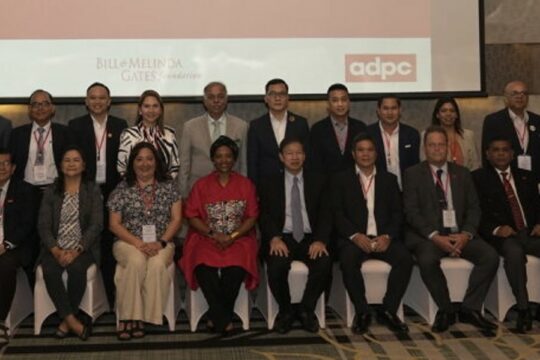
The exercises engaged 266 participants, including 79 women, representing national and sub-national disaster management authorities, commune councils, civil society organizations, community members, and private sector actors.
By moving beyond paper-based planning into simulated emergency conditions, the exercises enabled stakeholders to test coordination mechanisms, clarify operational roles, and identify gaps requiring further strengthening for effective flood preparedness and response.
Translating Contingency Plans into Action
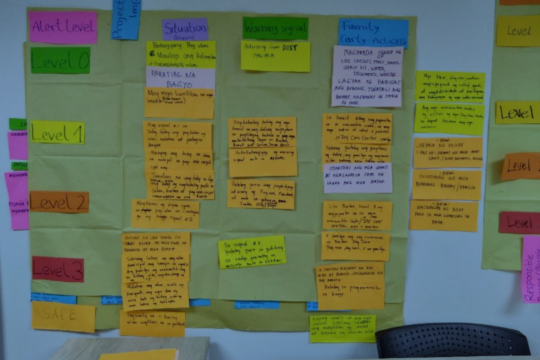
The simulation exercises were conducted in Chiro Ti Muoy, Tonle Bet, Prek A-Chi, and Svay Klaing communes, using scenario-based approaches designed around local flood risks and historical patterns. Participants were guided through progressive flood scenarios, starting from early warning alerts to full-scale evacuation and emergency response.
During the exercises, stakeholders operationalized the following key elements of the contingency plans:
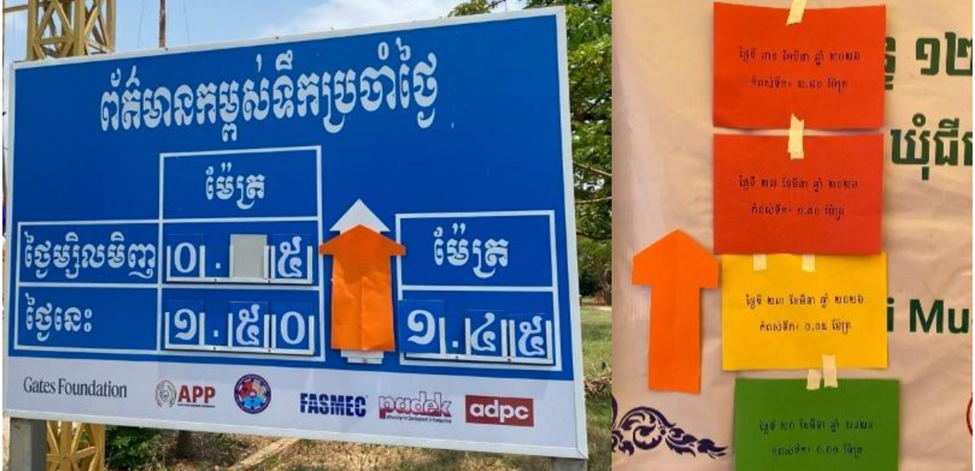
- Receiving, verifying, and disseminating early warning information to communities
- Activating commune-level coordination and command systems
- Mobilizing evacuation teams to safely relocate vulnerable populations using boats and tractors
- Establishing temporary shelters and delivering essential services such as water, food, health care, and sanitation
These practical simulations enabled participants to experience the realtime dynamics of emergency response, test the feasibility of planned actions, and better understand interdependencies among different response teams.
Strengthening Coordination and Operational Systems
Effective coordination is critical during emergencies, particularly at the local level where timely decisions can directly affect community safety. The simulation exercises therefore placed strong emphasis on strengthening coordination mechanisms through the CCDMs and improving the application of the Incident Command System (ICS) at the commune level.
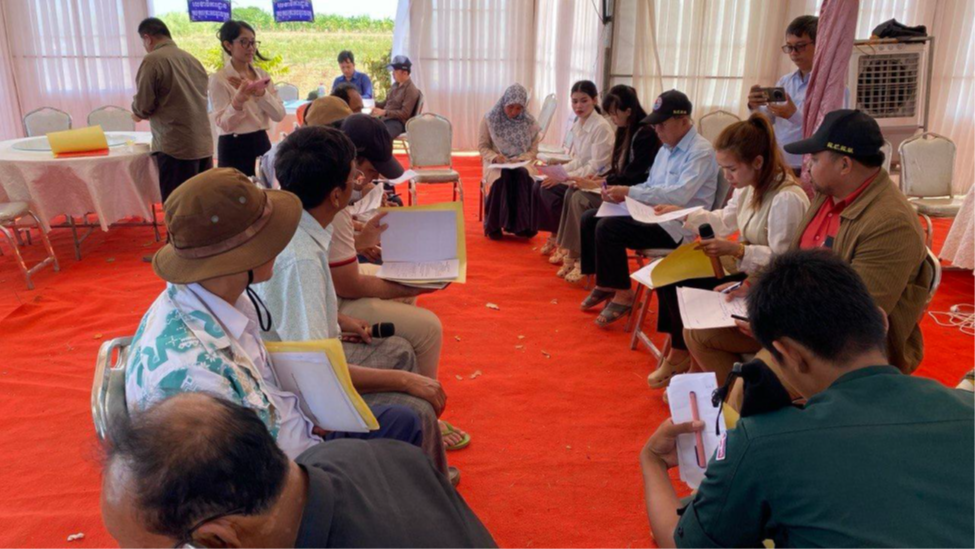
Initial simulation rounds revealed several operational challenges, including limited clarity in team roles, fragmented communication, and delays in decision-making processes. Response teams often operated independently, and coordination across units was not consistently structured.
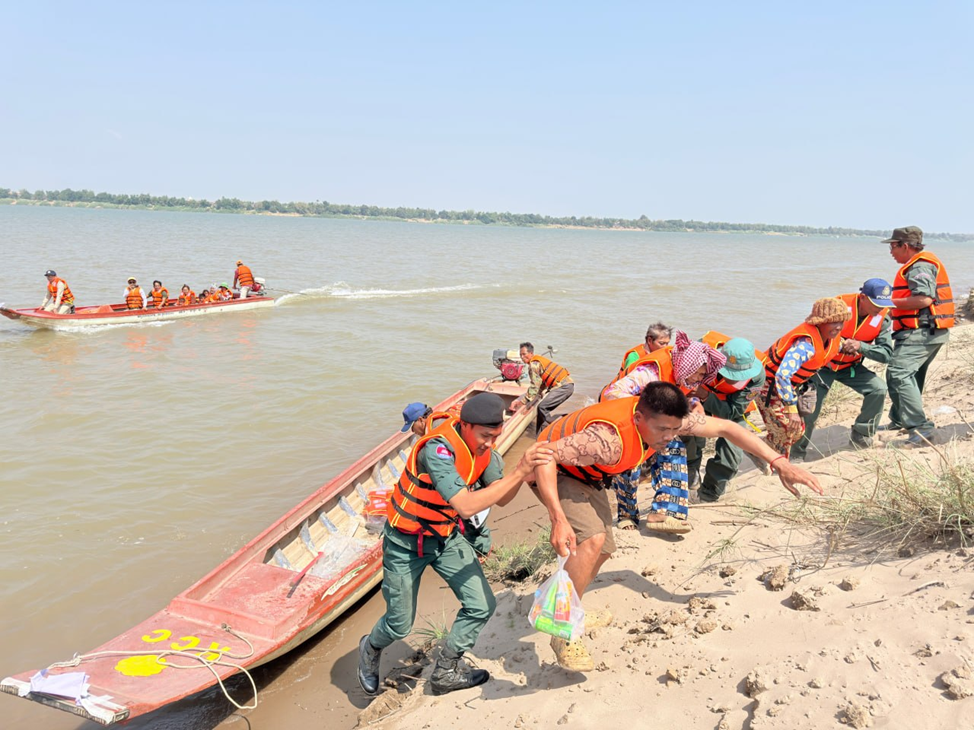
However, subsequent simulations in the following communes demonstrated clear improvement. Commune-level command posts became more effective in convening coordination meetings, assigning responsibilities, and guiding response operations. Information from assessment teams and village groups was more systematically analyzed and used to inform decisions, resulting in:
- More coherent and timely communication across teams
- Clearer task allocation and accountability
- Improved coordination between evacuation, rescue, health, and security teams
- More organized and efficient evacuation and response efforts
This progression highlights the importance of iterative, practice-based learning in strengthening disaster response systems and institutionalizing structured coordination mechanisms at the local level.
Enhancing Multi-Stakeholder Engagement and Local Capacity
Flood response requires coordinated action across multiple actors, particularly in communities where local resources and capacities are often stretched during emergencies. The exercises reinforced the multi-stakeholder approach promoted under the Preparedness Partnership of Cambodia by bringing together government authorities, civil society organizations, private sector representatives, and community members in a coordinated response effort.
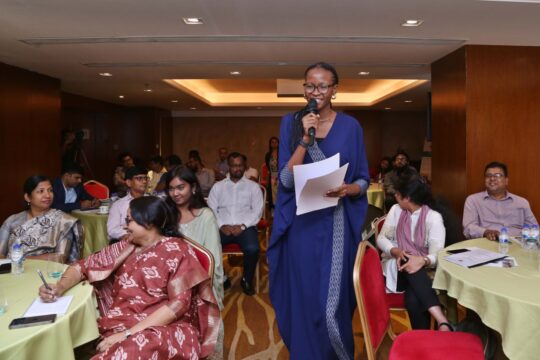
Village Disaster Management Groups, youth volunteers, health workers, and local authorities played active roles throughout the simulation, contributing to early warning dissemination, evacuation, first aid, and relief support. The involvement of private sector actors and local organizations further strengthened resource mobilization and operational support at the community level.
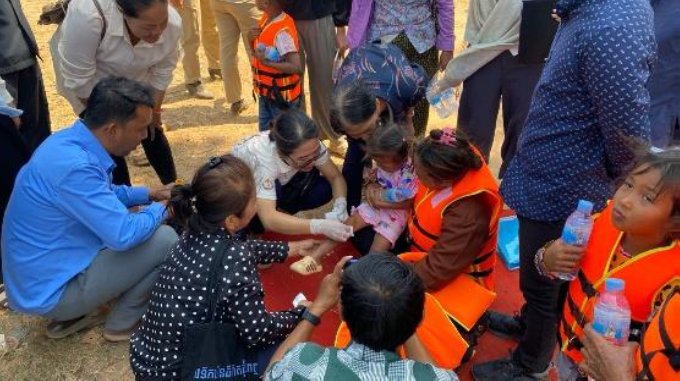
Participants noted that the hands-on nature of the exercises significantly enhanced their understanding of roles and responsibilities, improved teamwork, and built confidence in managing real disaster situations. The use of communication tools, such as radios, enabled real-time information sharing, demonstrating the importance of accessible and reliable communication systems in emergency contexts.
Identifying Gaps and Strengthening Preparedness Systems
The simulation exercises provided a practical platform to identify operational gaps and areas for improvement.
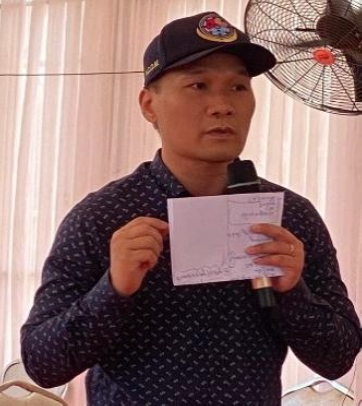
Key priorities identified include:
- Strengthening role clarity and coordination among response teams
- Enhancing communication protocols and information management systems
- Building the capacity of CCDM Secretariats in leadership and decision-making
- Conducting regular simulation exercises to reinforce preparedness
- Pre-positioning essential emergency resources at the commune level
These findings reinforce the importance of continuous learning and adaptation to ensure effective disaster preparedness and response systems.
Advancing Locally Led Disaster Preparedness in Cambodia
As climate-related flooding continues to affect vulnerable communities across Cambodia, strengthening local preparedness systems remains critical. The simulation exercises demonstrated that when local authorities, communities, and response actors regularly practice together, contingency plans become more actionable, coordination improves, and communities are better positioned to respond effectively during real emergencies.
Building on earlier efforts to strengthen contingency planning, early warning systems, and community-based disaster risk management, the ADRF-supported initiative continues to enhance the capacity of local actors to anticipate, prepare for, and respond to disasters.
Call to Action
To learn more about how ADPC and the Asian Preparedness Partnership support locally led disaster preparedness and risk management, visit www.adpc.net and app.adpc.net