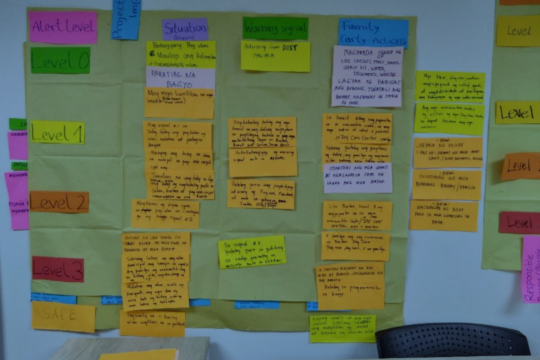
Tbong Khmum Province, Cambodia | 25–28 December 2025
Supported by the Asian Disaster Readiness Fund (ADRF) under the Asian Disaster Preparedness Center, funded by the Gates foundation, the Preparedness Partnership of Cambodia (PPC) conducted participatory flood risk identification activities across Chiro Ti Muoy, Tonle Bet, Prek A-Chi, and Svay Khlaing communes, strengthening local understanding of flood hazards, vulnerabilities, and capacities. The four-day exercise engaged 117 participants, including 26 women, and focused on generating evidence to inform commune-level flood risk management planning.
Participatory Assessment of Flood Risks and Vulnerabilities
The flood risk identification activities applied a participatory approach combining hazard mapping, vulnerability and capacity analysis, seasonal calendars, and identification of the most vulnerable households. Community members and Commune Committees for Disaster Management (CCDMs) worked together to document recurring flood patterns, exposure of residential and agricultural areas, and the impacts of flooding on livelihoods, rice production, crop cultivation, and livestock.
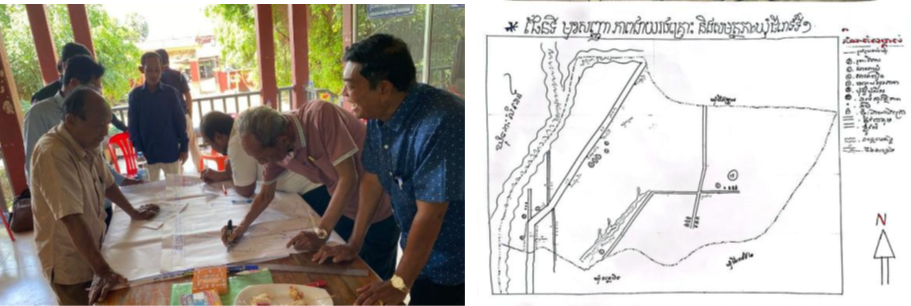
Across the four communes, participants consistently identified low-lying villages near rivers, canals, and drainage channels as high-risk zones. Vulnerable groups included elderly people living alone, women-headed households with small children, persons with disabilities, and households dependent on daily wage labor, particularly those living in weakly constructed houses in flood-prone areas.
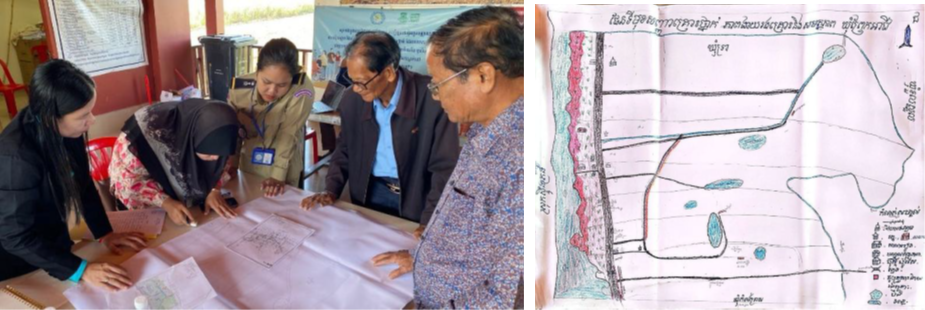
Understanding Flood Impacts on Livelihoods and Agriculture
The assessment highlighted the widespread impacts of seasonal flooding on local livelihoods. Participants reported disruption to daily wage labor and small trading, damage to rice fields during planting and harvesting stages, loss of stored rice and farming tools, and reduced agricultural yields due to prolonged inundation. In fishing-dependent communities, flooding damaged equipment and restricted access to fishing areas, while temporary labor migration during flood periods further affected household stability and food security.
From Risk Identification to Targeted Planning
Findings from the four communes provide a practical evidence base for the development of Commune Flood Risk Management Plans. The assessment emphasized the need to prioritize highly vulnerable households, address housing and infrastructure risks, protect livelihoods, and strengthen inclusive early warning and evacuation planning. Existing community capacities such as active CCDMs, community volunteers, flood monitoring poles, and local knowledge were identified as critical foundations for sustained preparedness and response.
By grounding flood risk management planning in locally generated data and community knowledge, the ADRF-supported initiative reinforces local ownership and supports more targeted, inclusive, and actionable flood preparedness efforts at commune and district levels.
Call to Action
To learn more about how ADPC and the Asian Preparedness Partnership support locally led flood preparedness and risk management, visit www.adpc.net and www.app.adpc.net