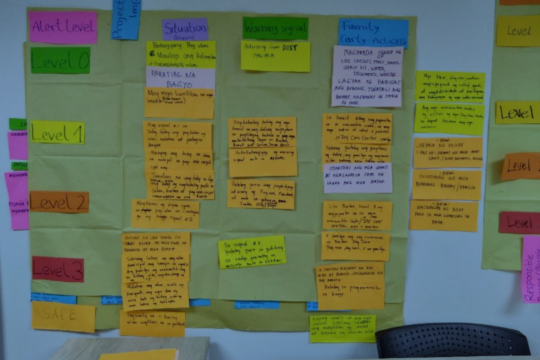
Siem Reap, Cambodia | 11–13 November 2025
Supported by the Asian Disaster Readiness Fund (ADRF), funded by the Gates foundation, the Preparedness Partnership of Cambodia (PPC) under the Asian Preparedness Partnership conducted a three-day Training of Trainers (ToT) for selected Commune Committee for Disaster Management (CCDM) members, strengthening local capacity to deliver standardized, practical disaster risk management training at the commune level. Held at Angkor Paradise Hotel in Siem Reap, the training brought together 35 (08 Female) participants, including CCDM members, district disaster officials, school headmasters, health center staff, women’s affairs focal points, village chiefs, and Cambodian Red Cross volunteers.
Strengthening Local Capacity through Practice-Oriented Training
The ToT aimed to equip commune-level CCDM representatives with the skills required to act as local trainers, enabling them to cascade disaster preparedness knowledge within their own communities. The training directly supports the Asian Preparedness Partnership’s localization agenda by developing a sustainable pool of local trainers and reinforcing the leadership role of local disaster management structures.
Participants engaged in a structured learning process combining adult learning principles, facilitation techniques, and hands-on practice using the National Committee for Disaster Management (NCDM) endorsed training manual. Over three days, sessions covered disaster risk management concepts, early warning systems including the national 1294 system gender-responsive disaster risk reduction, and hazard analysis, with strong emphasis on participatory methods and real-life community examples.
Leadership Commitment and Multi-Stakeholder Engagement
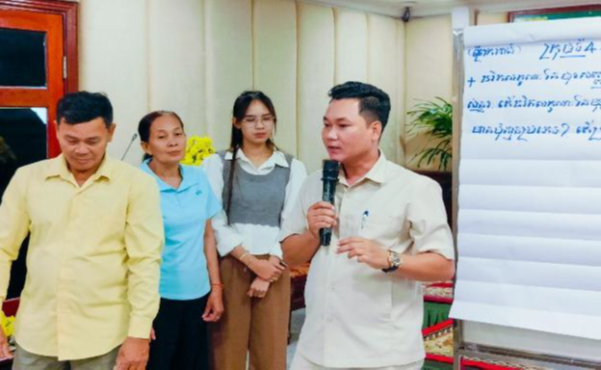
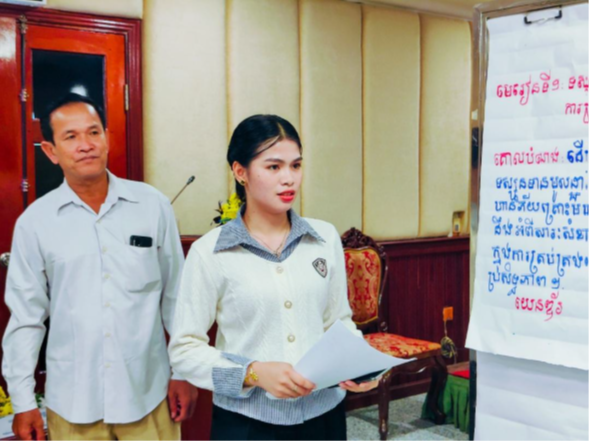
Opening remarks underscored the importance of local ownership and continuity in disaster preparedness. Representatives from national authorities, civil society, and the private sector highlighted the growing role of collaboration in strengthening community resilience. The training emphasized that preparedness is not a one-time activity but a continuous process that must be anchored at the frontline level.
Throughout the sessions, participants worked in commune-based groups to identify challenges affecting community engagement such as time constraints, expectations of compensation, and limited trust and proposed practical solutions to improve participation and relevance of future trainings.
From Training Room to Community Action
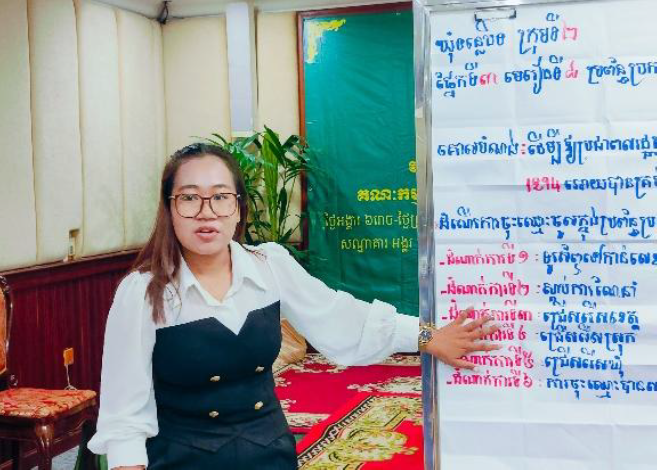
A key outcome of the Training of Trainers was the preparation of commune-level echo training plans. Participants from each target commune identified specific training topics, dates, and venues for follow-up sessions to be conducted in late November 2025. These echo trainings will focus on priority areas covered during the ToT including hazards and disasters, early warning systems (1294), and gender-responsive disaster risk management ensuring that the knowledge and facilitation skills gained are systematically cascaded to community members in Krouch Chhmar and Tbong Khmum districts.
Investing in Long-Term Preparedness
The training concluded with a certificate distribution ceremony attended by district leadership, who recognized the importance of building commune-level human resources as a long-term investment in disaster resilience. Appreciation was expressed for the collaboration among national authorities, civil society partners, the private sector, and technical partners, as well as for the support provided through the ADRF under the Asian Preparedness Partnership.
Call to Action:
To learn more about how the Asian Disaster Preparedness Center is supporting locally led preparedness through the Asian Preparedness Partnership, visit: www.adpc.net / www.app.adpc.net