Walasmulla DSD, Hambantota District, Sri Lanka | 25–26 November 2025
Supported by the Asian Disaster Readiness Fund (ADRF), under the Asian Preparedness Partnership (APP) program funded by the Gates foundation, the Sri Lanka Preparedness Partnership (SLPP) supported community consultations and planning workshops in the Walasmulla Divisional Secretariat Division to advance locally led preparedness for landslide and flood risks. The two-day activity focused on operationalizing community monitoring mechanisms, strengthening local committees, and translating earlier risk assessments into practical preparedness and response actions at the Grama Niladhari (GN) level.
From Risk Identification to Practical Preparedness
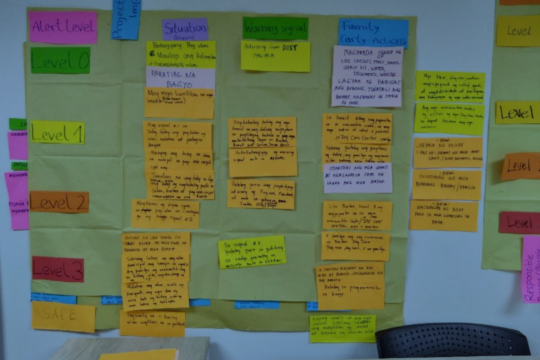
Building on findings from earlier field missions, the workshops brought together representatives from GN divisions, community leaders, and local institutions to review existing hazard conditions, early warning arrangements, and gaps in preparedness. Discussions emphasized the need to move beyond risk identification toward clear monitoring roles, response actions, and coordination protocols that communities can activate during heavy rainfall and flood events.
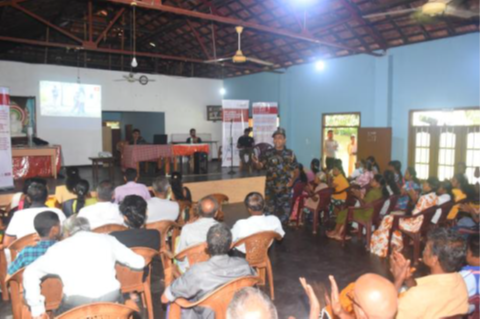
Participants revisited landslide- and flood-prone locations, validated proposed sites for rain gauges and manual bell systems, and reviewed how warnings are currently communicated at community level. Particular attention was given to challenges previously raised by communities, including limited audibility of warning bells during intense rainfall and the need for clearer thresholds to trigger early action.
Strengthening Community Monitoring Committees
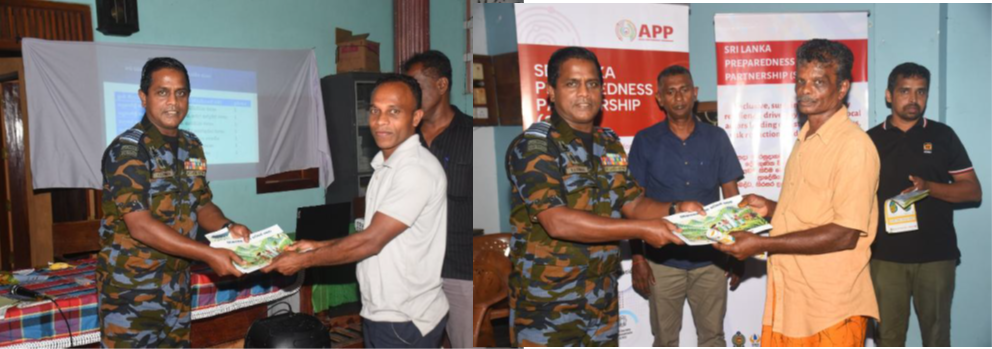
A central outcome of the activity was the strengthening of Landslide Risk Monitoring Committees (LRMCs) and Flood Risk Monitoring Committees (FRMCs) in the targeted GN divisions. Committee members clarified responsibilities for rainfall observation, bell activation, information sharing, and coordination with divisional and district authorities. The discussions reinforced the importance of inclusive representation, ensuring participation of women, youth, religious leaders, and other community representatives in monitoring and decision-making processes.
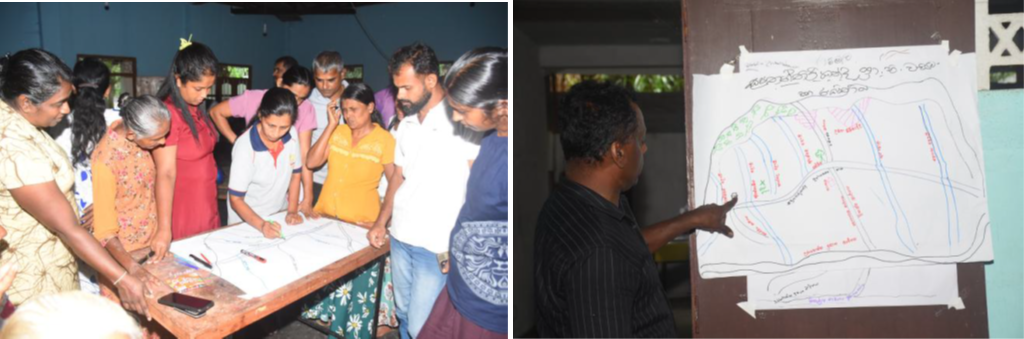
The sessions also highlighted practical support needs for effective monitoring, including safe access to monitoring points during heavy rain and the availability of basic equipment for committee members tasked with night-time or prolonged observation duties.
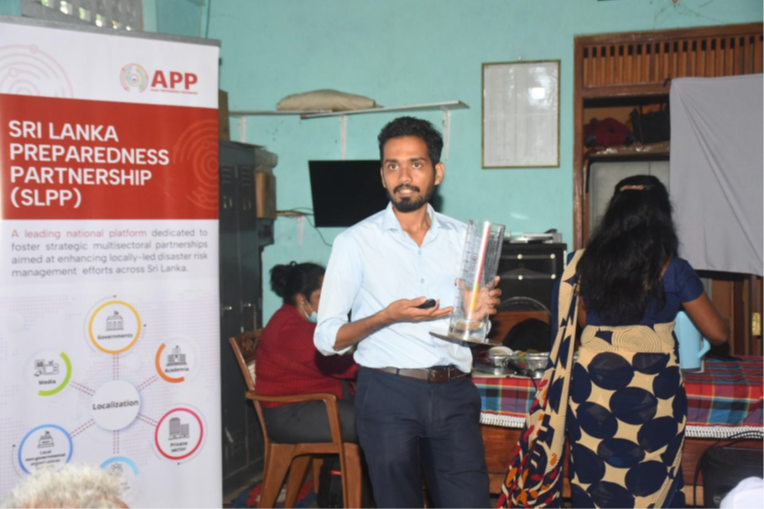
The workshop also advanced plans to introduce semi-automated rain gauges and tilt meters in selected high-risk GN divisions. The semi-automated rain gauges are intended to improve the accuracy and consistency of rainfall monitoring while remaining manageable at community level, reducing reliance on deteriorated manual gauges. Tilt meters will complement rainfall data by detecting early signs of slope movement in landslide-prone areas, strengthening community decision-making for timely alerts and early action in coordination with technical agencies.
Linking Community Action with Government Systems
Officials from the Divisional Secretariat – Walasmulla, District Disaster Management Coordinating Unit (DDMCU) – Hambantota, and partner agencies engaged with communities to align local preparedness actions with existing government procedures. The workshops contributed to refining coordination pathways for early warnings, damage reporting, and response support ensuring that community-generated information can feed into divisional and district decision-making in a timely manner.
Advancing Locally Led Preparedness
By consolidating community monitoring arrangements and preparedness actions within Walasmulla DSD, the initiative strengthens the foundation for forecast-based early action that is grounded in local knowledge and owned by communities themselves. The outcomes will inform subsequent equipment installation, training, and awareness activities planned under the SLPP in Hambantota District.
Call to Action
To learn more about how ADPC and the Asian Preparedness Partnership are strengthening community-led preparedness and early warning systems across Asia, visit www.adpc.net and www.app.adpc.net.



)