Madawachchiya DSD, Anuradhapura District, Sri Lanka | 17–18 September 2025
Supported by the Asian Disaster Readiness Fund (ADRF), funded by the Gates foundation, the Sri Lanka Preparedness Partnership (SLPP) conducted community consultations and GN-level Disaster Management Committee formation workshops in Thulaweliya (Pulleliya GN Division) and Padiggama (Heeralugama GN Division) to strengthen locally led disaster risk management in Madawachchiya Divisional Secretariat Division. The two-day activity focused on understanding local disaster risks and developing participatory disaster risk management and monitoring plans grounded in community knowledge and priorities.
Understanding Multi-Hazard Risks through Community Knowledge
The consultations addressed the multiple and compounding risks faced by communities in Madawachchiya, including prolonged drought and water insecurity, seasonal flooding and flash floods, human–elephant conflict, and climate-related extreme weather such as strong winds and lightning. Using Community-Based Disaster Risk Management (CBDRM) principles, participants worked with facilitators to document hazard patterns, vulnerable households, and seasonal risk trends affecting livelihoods, safety, and access to essential services.
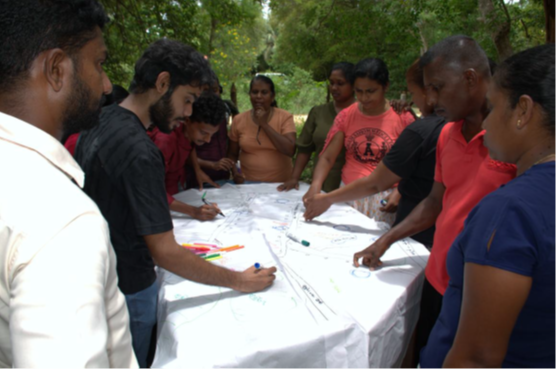
Across the two villages, communities highlighted how drought and declining water availability affect agriculture and domestic use, while flooding linked to irrigation systems and waterways disrupts transport and damages assets. Human–elephant conflict was identified as a recurring threat to both safety and livelihoods.
Formation of Inclusive GN-Level Disaster Management Committees
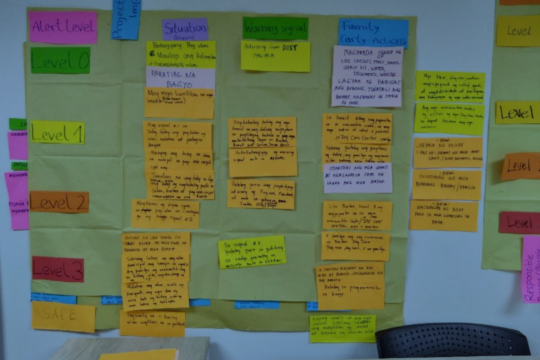
A key outcome of the consultations was the establishment and strengthening of GN-level Disaster Management Committees in both villages. Committees were formed through inclusive community selection processes, ensuring representation of women, elders, youth, and other vulnerable groups. Each committee agreed on the formation of five functional sub-committees responsible for early warning; evacuation and rescue; health and welfare; relief camp management; and search and response, clarifying roles and coordination arrangements during emergencies.
Developing Participatory Risk Management and Monitoring Plans
Participants applied a range of Participatory Rural Appraisal (PRA) tools, including hazard and risk mapping, seasonal calendars, historical timelines, problem ranking, and resource and capacity mapping. These exercises enabled communities to translate lived experience into Participatory Disaster Risk Management and Monitoring Plans, consolidating risk information, preparedness actions, response arrangements, and resource inventories into practical village-level tools.
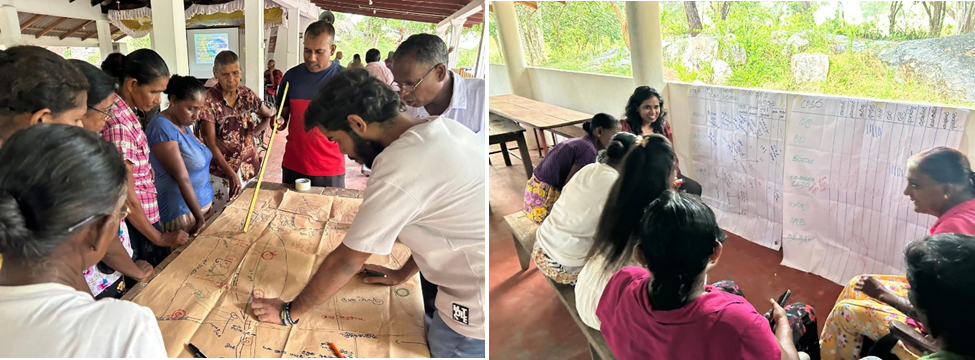
The participatory risk analysis directly informed the prioritization of feasible interventions. In Padiggama, communities identified the rehabilitation of a small village tank as a priority to address drought and drinking water shortages. In Thulaweliya, renovation of the Maha Wewa spillway was prioritized to reduce flood impacts during heavy rainfall while improving water availability during dry periods.
Linking Community Action with Government Systems
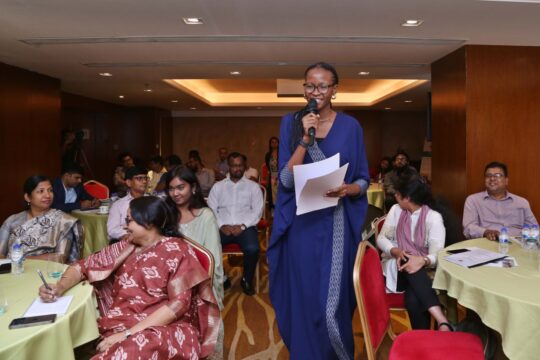
The consultations were conducted with active participation from the Divisional Secretariat – Madawachchiya, District Disaster Management Coordination Unit (DDMCU) – Anuradhapura, National Disaster Relief Services Centre (NDRSC), and SLPP partners, including Janathakshan GTE Ltd. The resulting draft plans will be validated with communities and relevant authorities to support integration with divisional and district disaster management systems.
By anchoring disaster preparedness planning in community leadership and structured participation, the initiative strengthens coordination between villages and formal institutions while reinforcing local ownership of disaster risk reduction efforts.
Call to Action
To learn more about how ADPC and the Asian Preparedness Partnership are supporting community-based disaster risk management and locally led preparedness across Asia, visit www.adpc.net and www.app.adpc.net.
)