Tarlac City, Philippines | November 2025
Supported by the Asian Disaster Readiness Fund (ADRF) under the Asian Preparedness Partnership (APP) program, funded by the Gates foundation, the Philippine Preparedness Partnership (PhilPrep) advanced community-based early warning in Tarlac City through the installation of technology-enabled Early Warning System (EWS) devices, combining flood monitoring, seismic detection, and real-time data transmission. Implemented through the Talagháy (Resilience) project, the installations were designed through multi-stakeholder consultations and informed by hazard assessments and community inputs.
Installing Flood Sensors Where Risk Is Highest
As part of the EWS network, a submersible hydrostatic pressure level flood sensor using Long-Range Wide Area Network (LoRaWAN) – enabled Internet of Things (IoT) technology was installed along Romulo Highway, at the boundary of Barangays San Isidro and Tibag. The location was finalized following coordination with local authorities on 25 November 2025 and reflects high flood hazard zones identified through flood modelling, community hazard mapping, and local knowledge of flood flow patterns.
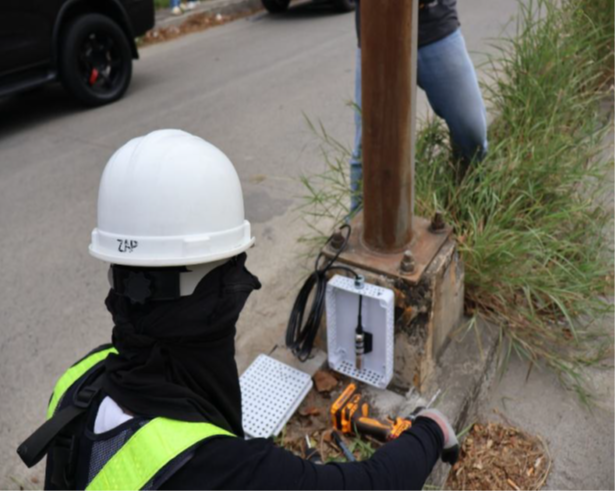
The sensor measures and records water levels during flooding events and transmits data wirelessly to a gateway hosted at the New Christian Academy, which agreed to support the installation through the Provincial Engineering Office. This configuration enables efficient, long-range data transmission while minimizing power consumption and maintenance requirements.
Integrating Technology with Local Response Systems
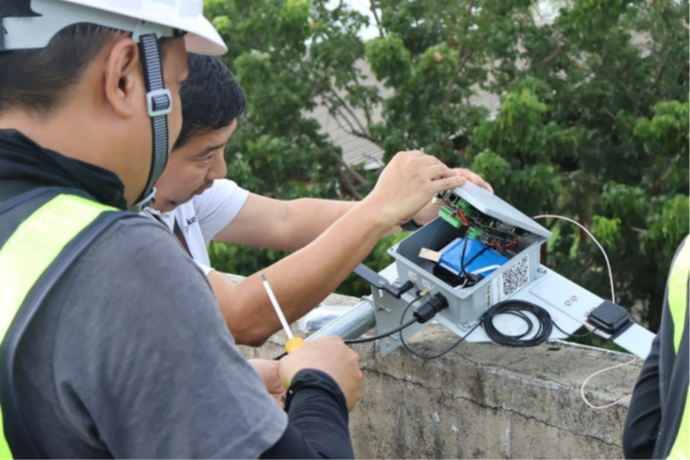
The installation process, conducted on 28 November 2025, involved collaboration among Packetworx Inc., the UP Resilience Institute (UPRI), Tarlac State University, the Provincial Engineering Office, and the Tarlac City Disaster Risk Reduction and Management Office (CDRRMO). Local officials played a key role in identifying optimal sensor placement, particularly along flood-prone road sections that are closed during severe flooding to ensure public safety.
The flood sensor complements existing community assets, including a network of closed-circuit television cameras used by Barangay San Isidro to monitor river levels and road conditions during heavy rainfall.
Strengthening Earthquake Monitoring Capacity
In addition to flood monitoring, a Raspberry Shake RS4D seismograph was installed at the Provincial Government of Tarlac to enhance local earthquake detection. The four-component seismograph combines a geophone and accelerometers to detect both local and distant seismic activity. Installed by specialists from GEOS Inc., the device transmits real-time, open-source data accessible to government institutions, researchers, and the public.
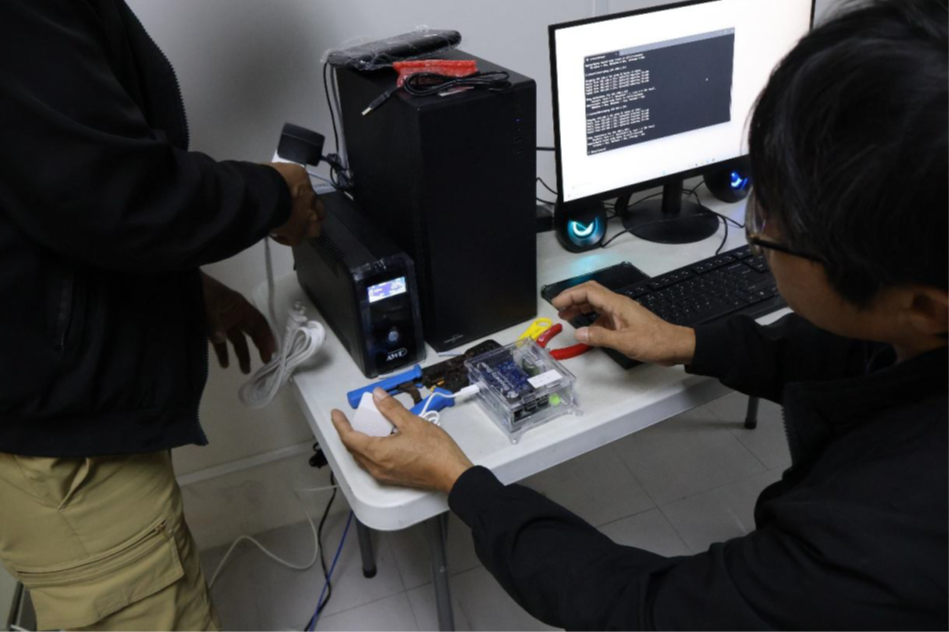
An orientation session introduced provincial and barangay representatives—including youth leaders—to the operation, interpretation, and potential applications of seismic data, supporting risk awareness and preparedness beyond flood hazards.
Toward a Connected Early Warning Network
The installed devices form part of a broader EWS network under the Talagháy project. Additional flood sensors are planned for installation in Sitio Bacuit, Barangay Tibag, based on continued hazard assessment and community consultations. The integration of sensors, gateways, and monitoring platforms lays the foundation for more timely, data-informed decision-making at barangay and city levels.
Call to Action
To learn more about how ADPC and the Asian Preparedness Partnership are supporting technology-enabled, locally led early warning systems across Asia, visit www.adpc.net and www.app.adpc.net.



)