Bangkok, Thailand | 5-6 November 2026
How prepared are local institutions to respond when disaster strikes, and how can their capacities be measured and strengthened? These questions brought disaster risk management practitioners, technical experts, and development partners together at the Response Capacity Index (RCI) Learning Lab Workshop organized by the Gates Foundation, held from 5 to 6 November 2026 at The Athenee Hotel in Bangkok, Thailand.The workshop provided a platform for exchanging experiences from the application of RCI across Asia, Africa, and Latin America, highlighting its growing potential as a practical tool for strengthening locally led disaster preparedness. For the Asian Disaster Preparedness Center (ADPC), the discussions were particularly significant, showcasing experiences from Ethiopia, Bangladesh, and Cambodia, while opening opportunities for future application in Nepal’s municipalities and Sri Lanka’s schools.
Originally developed by the Honduran Institute of Earth Sciences (IHCIT) at the National Autonomous University of Honduras, RCI is an evidence-based assessment tool designed to measure local disaster response capacities. It examines four critical dimensions: organizational preparedness, disaster risk management knowledge, available response resources, and emergency infrastructure and services. By identifying existing strengths and gaps, the tool enables local institutions to prioritize investments, strengthen emergency response systems, and monitor improvements over time.Bangladesh: Advancing RCI Through the APP+ Approach
Bangladesh’s experience emerged as an important example of adapting an international assessment methodology through a nationally led, multi-stakeholder partnership.
Through the APP+ approach of the Asian Preparedness Partnership (APP), the Bangladesh Preparedness Partnership (BPP) has brought together partner organizations representing the government, academia, civil society, and the private sector to strengthen locally led disaster preparedness. Led by the Ministry of Disaster Management and Relief (MoDMR), with technical assistance from ADPC and financial support from the Gates Foundation, BPP demonstrates how regional knowledge exchange can translate into practical national and local action.
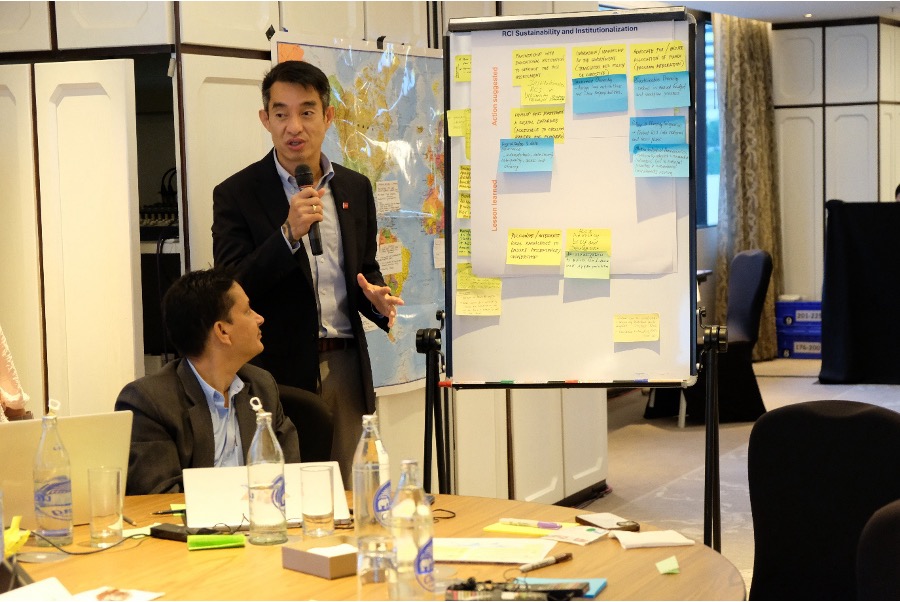
photo – ADPC
Under this initiative, RCI was adapted and piloted in three disaster-prone municipalities: Bagerhat, Cox’s Bazar, and Kurigram. Academic partners from BRAC University and the University of Dhaka supported the assessment process, working with municipal authorities and local disaster management stakeholders.
A significant achievement was the contextualization of the original RCI questionnaire to reflect Bangladesh’s disaster management systems and local realities. The adapted tool incorporated additional considerations related to gender equality and disability inclusion, expanding the assessment to 99 questions across 27 indicators.
Beyond measuring response capacity, Bangladesh’s experience highlighted the importance of government ownership, inclusive participation, and integrating assessment findings into existing disaster management systems. The workshop discussions also emphasized the potential of RCI findings to inform local emergency response plans, improve resource allocation, and support periodic preparedness assessments.
This experience illustrates the wider value of the APP+ approach: connecting national institutions with international expertise while ensuring that the resulting tools and knowledge remain locally relevant, inclusive, and actionable.
Cambodia: Building Trust and Strengthening Municipal Ownership
Cambodia’s experience provided another valuable perspective on the application of RCI in different institutional and governance contexts.
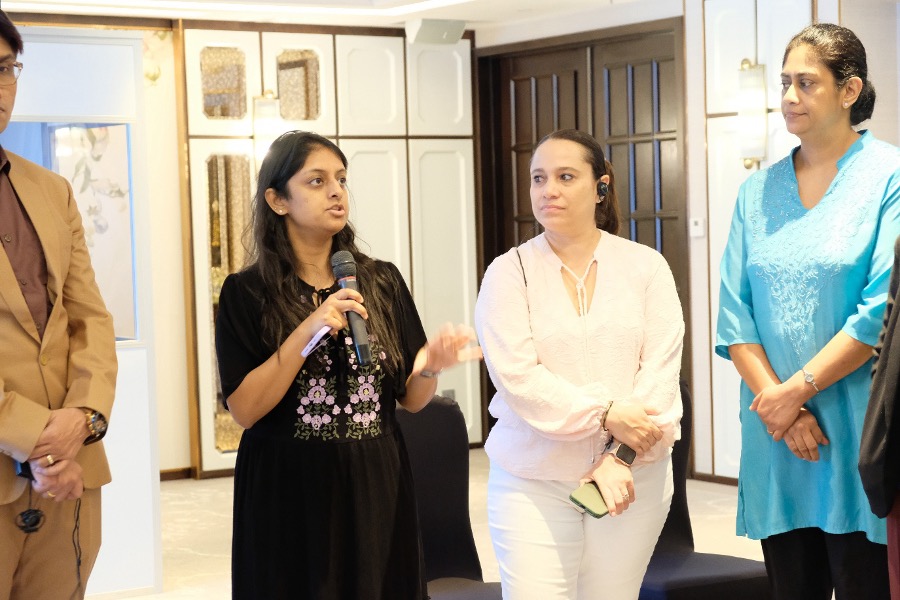
Photo – ADPC
With ADPC’s technical engagement, the methodology has been introduced and tested in Cambodian municipal settings to identify local disaster response capacities and preparedness needs.
An important lesson shared during the workshop concerned institutional ownership and the way capacity assessments are communicated to local authorities. Cambodia’s experience demonstrated that the term assessment could sometimes be perceived as an external evaluation of institutional performance, potentially discouraging open participation.
Reframing the exercise as a Response Capacity and Needs Assessment helped emphasize collaborative learning, institutional self-assessment, and the identification of practical improvement priorities.
The experience reinforced a central principle of locally led preparedness: assessment tools are most effective when local authorities understand their purpose, participate in their application, and use the findings to guide their own preparedness actions.
Nepal and Sri Lanka: Exploring Innovative Applications
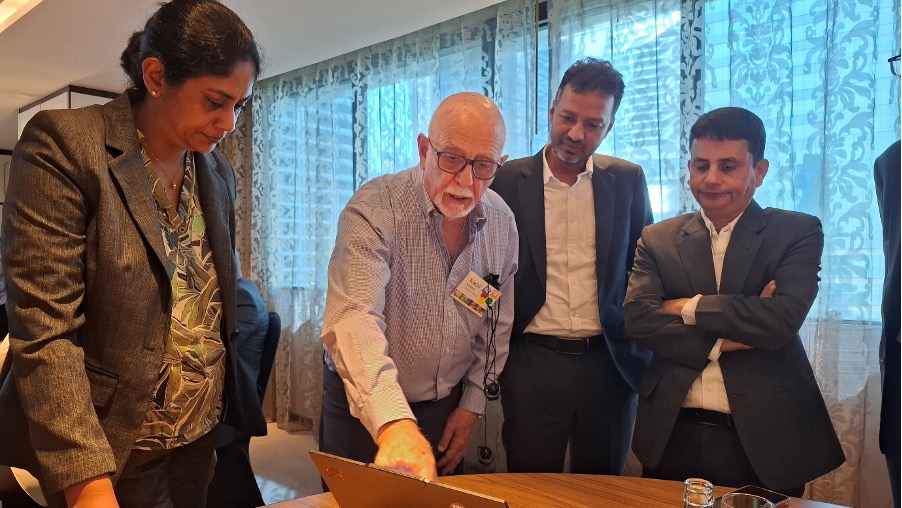
Photo – ADPC
L to R: Prof. Udyangani Kulatunga, Professor, Centre for Disaster Risk Reduction, University of Moratuwa, Sri Lanka;
Prof. Nabil Kawas, Professor at the Honduran Institute of Earth Sciences (IHCIT), Honduras;
Dr. Raju Thapa, Response and Recovery Coordinator, ADPC; and
Mr. Kaji Ram Karki, Assistant Professor, Institute of Engineering, Tribhuvan University, Nepal.
Building on the experiences of Bangladesh and Cambodia, the workshop also generated interest in expanding the application of RCI to new institutional settings through the APP network.
In Nepal, representatives explored the potential of adapting and piloting RCI in selected disaster-prone municipalities. Through the Nepal Preparedness Partnership (NPP), this could complement ongoing efforts to strengthen municipal disaster preparedness, local emergency operations, and coordination between government institutions and communities.
Given Nepal’s existing disaster risk governance and preparedness assessment mechanisms, future application would focus on complementing established systems rather than introducing parallel assessment processes. An initial pilot could help identify operational gaps and generate evidence for targeted municipal capacity strengthening.
Meanwhile, Sri Lanka presented a particularly innovative possibility: adapting RCI for assessing disaster preparedness and emergency response capacities in schools. While originally designed for municipal governments, the tool’s flexible methodology presents opportunities to assess institutional preparedness in educational settings. A school-focused adaptation could examine emergency preparedness arrangements, staff and student awareness, evacuation procedures, coordination mechanisms, and the availability of essential safety resources.
Such an application could provide a structured, evidence-based approach to identifying gaps in school disaster preparedness and guiding targeted improvements. It could also complement the Sri Lanka Preparedness Partnership’s (SLPP) broader work on disaster risk reduction, resilience, and locally led preparedness.
These emerging interests remain exploratory, with further technical adaptation, institutional consultation, and potential pilot arrangements required before implementation.
From Assessment to Action: Strengthening Regional Learning
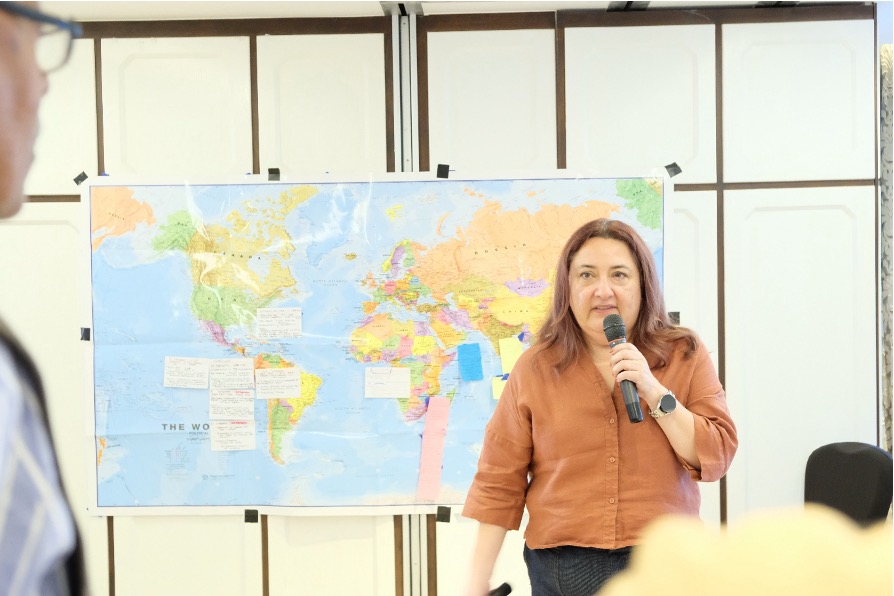
Photo – ADPC
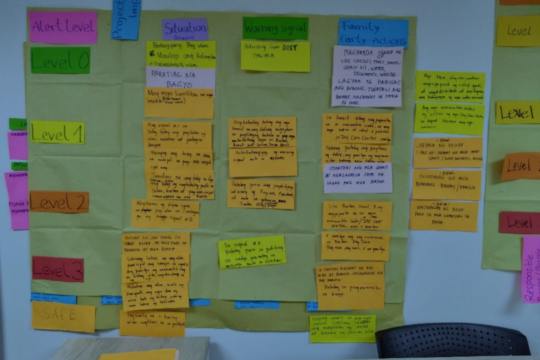
Throughout the two-day Learning Lab, interactive sessions, including the RCI living map, thematic world café discussions, peer exchanges, and knowledge marketplace, encouraged participants to reflect on implementation challenges and identify opportunities for improving the methodology.
A recurring message was that RCI should not end with the generation of an assessment score. Its value lies in translating evidence into better preparedness plans, stronger institutional coordination, informed investments, and measurable improvements in response capacity. The workshop also highlighted the importance of balancing methodological consistency with contextual flexibility, strengthening government ownership, engaging academic institutions, and establishing sustainable mechanisms for periodic assessments.
For APP, the exchange demonstrated how knowledge generated in one country can inform preparedness practices elsewhere. Bangladesh’s APP+ experience and Cambodia’s municipal application offer valuable lessons for Nepal’s potential municipal-level pilots, while Sri Lanka’s interest in school-based assessments presents an opportunity to explore the tool’s relevance beyond its original municipal scope.
As APP continues to promote South-South cooperation, regional knowledge exchange, and locally led disaster preparedness, the RCI experience highlights how a practical assessment methodology can evolve into a broader platform for institutional learning and action. The emerging interest from Nepal and Sri Lanka offers promising pathways for extending this learning, ensuring that preparedness capacities are not only assessed but progressively strengthened where they matter most.